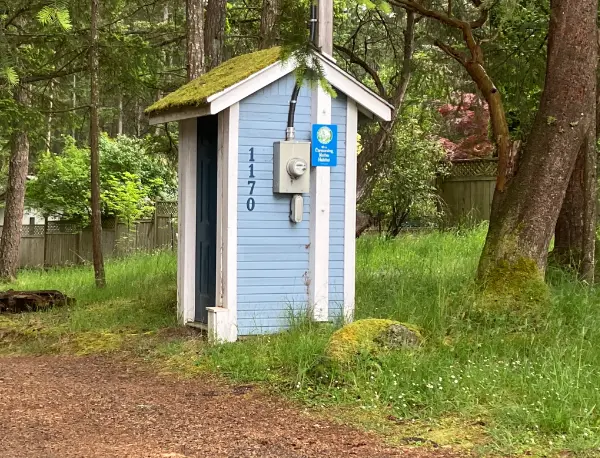
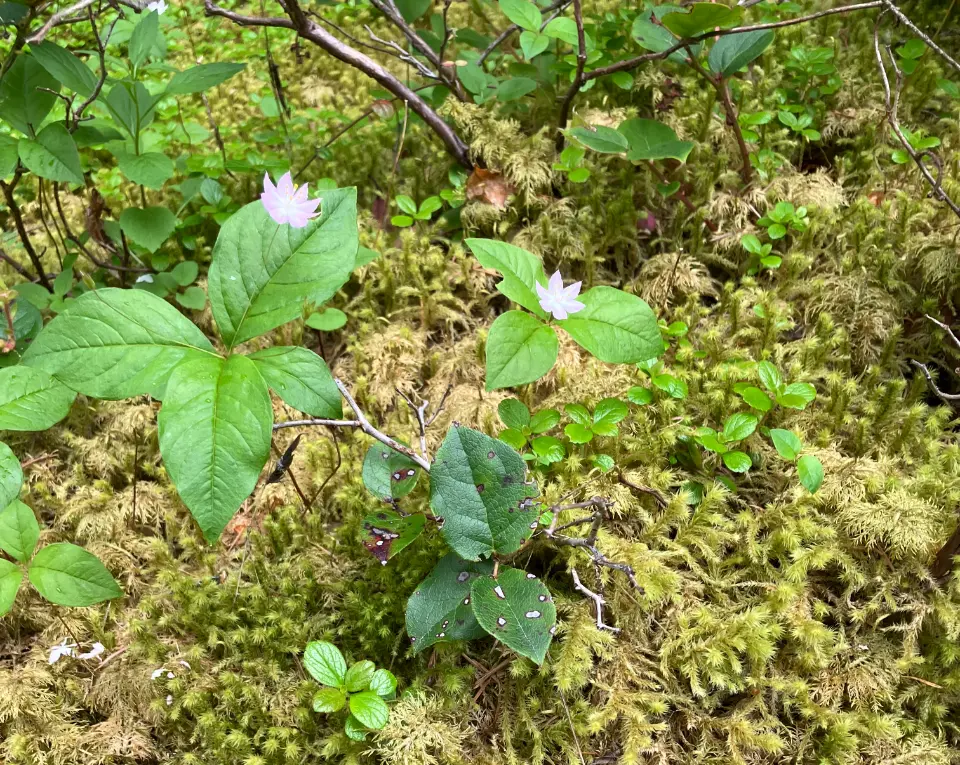
We are not the only victims of the Great Lawn Delusion. The real victims are the involuntarily displaced residents who lived in the place where the lawn is now… we transform a rich, interesting, lively piece of earth into a lawn that has the biological diversity of a shag rug. ” — Briony Penn, A Year on the Wild Side (2019)
No Mow May is a popular initiative encouraging people to support pollinators in the spring, but it’s just the start of changing your mindset about what makes a well-kept yard. On Gabriola our properties aren’t always really suitable for lawns, and in summer the fire department restricts the use of lawnmowers. Why not embrace more natural spaces, and the moss and wildflowers they often support by default, as a benefit?
Nature Steward volunteers often recommend to property owners that they reduce the amount of lawn since lawns are fairly barren in terms of biodiversity. An easy way to reduce lawn is to stop mowing to the edge, allowing native shrubs or herbaceous plants to encroach while keeping an eye out for invasives.
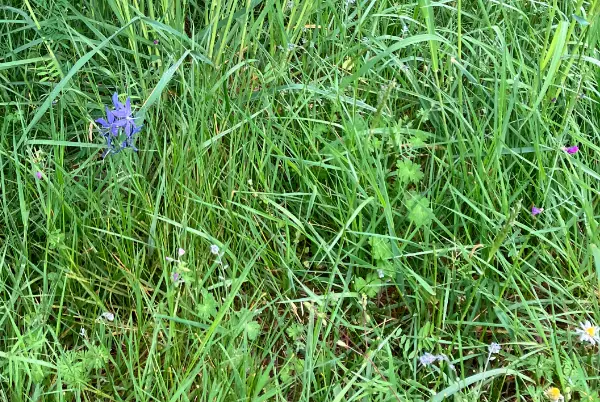
When Sally and John joined the Nature Stewards program in 2022, the volunteers noted one flowering camas lily. Sally recently emailed to say that they had over two dozen blooming this spring. The difference, she believes, is that they have stopped mowing the grass on their property in the springtime. These beautiful and important native flowers have not been planted but rather are naturally occurring and spreading. There are also carpets of blue eyed Mary and miner’s lettuce as well as other native and nonnative flowers.
Sally says, “We have a small yard, unfenced front and back so the deer wander through and the odd racoon, barred owls call at night (also invasive apparently, but I love hearing them), song birds etc, pileated woodpeckers that nest nearby and seem to like our yard, and flickers that have nested in the cedars down by the road. Turkeys have also found our neighborhood… mixed blessing if you can call it that. The cedars are unfortunately struggling. So our yard isn’t pretty, but we love it… and the very loud and bold squirrel that owns all. The birds also get upset if I let the bird bath go dry. We all live in a pretty special place.”
Bee City Canada has many ideas for intentionally increasing biodiversity.